If you design furniture or interiors for your home or office, such as wardrobes and cabinets, doors, wall panels or long shelves — the choice of panel material matters a lot. That’s why blockboard has become a go-to choice for modern furniture makers and interior designers. In this guide, I’ll walk you through what makes blockboard special, when to use it, and why Navkar Plywood stands out as a top Block Board Manufacturer.
Understanding Blockboard and Its Importance
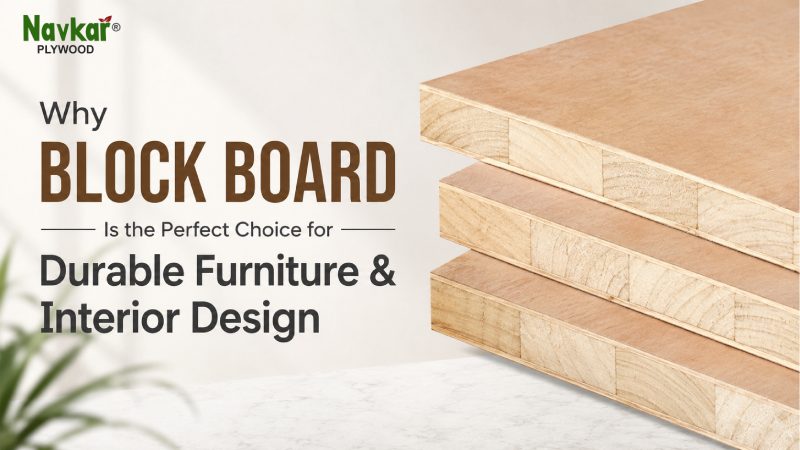
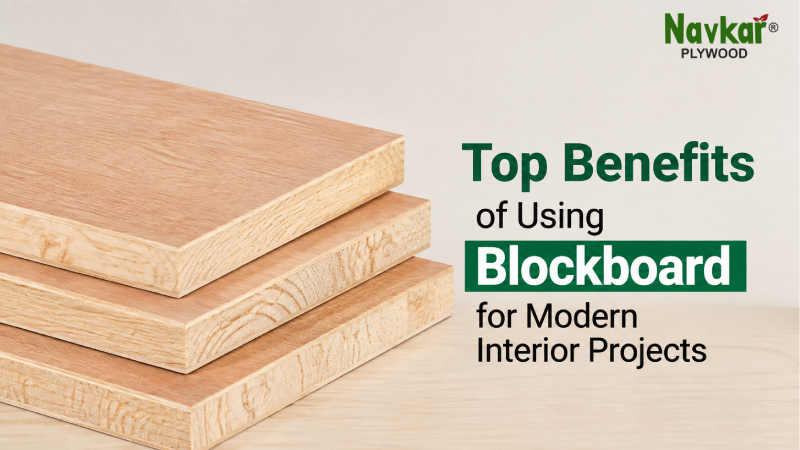
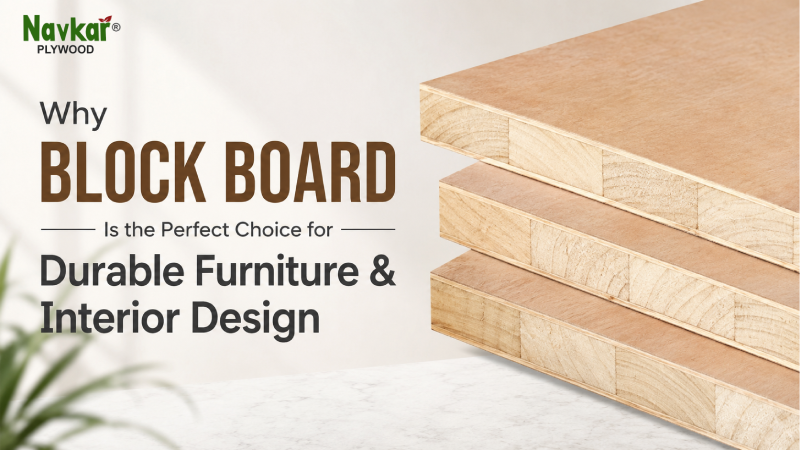
Blockboard is an engineered wood panel constructed by placing a core of solid wood strips (or battens) side-by-side, then sandwiching that core between two layers of wood veneer. The result is a board that combines strength, stability, and a smooth, finish-ready surface.
Because the core is made of wood strips rather than a single solid slab, blockboard remains lighter than solid wood or many plywoods, yet strong enough for heavy-duty furniture and long-span applications.
Key Advantages of Blockboard Over Other Materials
Choosing blockboard over solid wood, plywood, MDF, or particle board brings several benefits — especially when used intelligently for modern interiors:
- Balanced Strength and Lightness: Blockboard achieves a high strength-to-weight ratio: the solid-wood strip core gives structural stability, while its relatively lighter weight makes it easier to handle, transport, cut, and install. This reduces labor, effort, and cost.
- Excellent Screw-Holding Capacity and Stability: Because of its core construction, blockboard grips screws and nails securely. That makes it ideal for furniture joints, hinges (for doors), drawer runners, wardrobes, and other pieces where hardware is used.
- Less Sagging, Warping or Cracking — Especially for Long Spans: Blockboard resists bending or sagging over time, particularly in long furniture pieces like bookshelves, benches, tables or cabinets that span 6-7 feet or more.
- Smooth, Finish-Ready Surfaces — Better for Laminates, Veneers or Paint: The outer veneer layers offer a smooth, flat base which can be easily laminated, veneered, painted, or polished. That makes blockboard versatile for modern design aesthetics — be it sleek minimalism or classic wood-grain elegance.
- Cost-Effectiveness Compared to Solid Wood or Premium Plywood: Blockboard delivers many of the benefits of solid wood and plywood — strength, durability, stability — but typically at a lower cost. This makes it a value-driven choice for furniture, interiors, and cabinetry.
- Versatility — Works for Furniture, Doors, Wall Panels, Partitions & More: From wardrobes and kitchen cabinets to doors, bookshelves, wall paneling, office furniture, partitions, and even decorative interiors — blockboard’s structural and finishing flexibility makes it a multipurpose solution.
What to Look for When Selecting Blockboard
Not all blockboards are created equal. When choosing blockboard, you must pay attention to:
- Core wood and veneer quality: Solid wood strips (seasoned and treated) for the core, and durable hardwood veneer for faces.
- Adhesives and bonding process: Proper high-pressure pressing with quality resin ensures stability, moisture resistance, and long-term durability.
- Grade & Certification: Blockboard meeting standards such as IS:1659 or IS:303 give confidence in quality and suitability.
- Board Thickness & Dimensions: Choose appropriate thickness (common 19 mm or 25 mm) and proper size (e.g. 8×4 ft standard) depending on your project.
- Moisture Resistance (if needed): For kitchens, bathrooms, or humid environments — consider blockboards manufactured with waterproof or BWP-grade resin for improved resistance.
How to Choose the Right Blockboard for Your Project
Here’s a quick roadmap to help you decide on the right blockboard variant for your furniture or interior work:
- Define the Purpose — furniture (wardrobes, cabinets, shelves), doors, partitions, wall-panels, etc.
- Check Environmental Conditions — interior dry room, kitchen/bathroom (moisture exposure), climate (humidity).
- Decide Board Specifications — thickness (19 mm / 25 mm), board size (standard 8×4 ft or custom), grade (standard / BWR / waterproof).
- Select Finishing — laminate, veneer, paint, or polish based on design aesthetic.
- Install Properly — use correct screws, adhesives (if needed), and finishing to maintain longevity.
- Maintain & Care — avoid excessive moisture exposure, wipe clean gently, avoid harsh chemicals.
Common Applications of Blockboard in Modern Interiors
Blockboard finds a wide variety of uses across homes, offices, commercial spaces and custom furniture. Some common applications:
- Wardrobes, Cabinets & Storage Units — light yet strong, with secure screw fixtures.
- Interior Doors & Flush Doors — blockboard doors are lighter, easier to install, and handle hinges well.
- Modular Kitchens & Kitchen Cabinets — especially BWR / waterproof blockboards for moisture-prone environments.
- Bookshelves, Long Tables, Benches minimally sagging on long spans; reliable over time.
- Wall Panels, Partitions & False Ceilings — smooth surfaces ready to finish; good for interior décor and office partitions.
- Office & Commercial Furniture, Shop Fixtures — cost-effective, sturdy, and versatile for design.
- Custom Furniture & Designer Interiors — due to finishing flexibility: laminate, veneer, paint.
Why Choose Us
Navkar Plywood believes that good interiors are built on quality materials. As a leading Block Board Manufacturer in Gujarat, Navkar Plywood combines decades of experience with modern manufacturing standards and strict quality control. Our blockboards offer premium strength, smooth finishing, moisture resistance, and long-lasting performance — making them perfect for furniture, doors, wall panels, and cabinetry. When you choose Navkar Plywood, you choose reliability, variety, and craftsmanship that lasts.
Conclusion
Blockboard offers a perfect balance between strength, lightness, cost-effectiveness and design flexibility — exactly what modern interiors and furniture projects need. Because blockboard combines a solid wood-strip core with sturdy veneer, it performs well under load, grips screws firmly, resists sagging, and remains manageable during transport and installation. When you opt for a trusted Block Board Manufacturer like Navkar Plywood, you get blockboards that meet industry standards, offer moisture resistance (including BWR / waterproof variants), and deliver finish-ready surfaces for laminates, veneers or paint. For wardrobes, cabinets, doors, wall paneling, tables, shelves, or any custom interior work — blockboard is often the ideal material choice.
If you want to explore blockboard call us at +91 90167 87132 or email info@navkarplywood.in.
key takeaways
- Balanced Strength and Lightness – Blockboard combines a solid wood-strip core with veneered faces, providing high strength while remaining lighter than solid wood or plywood. This makes it easier to handle, transport, and install, reducing labor and costs.
- Excellent Screw-Holding Capacity and Stability – The core construction allows blockboard to securely hold screws and nails, making it ideal for furniture joints, doors, drawers, and long-span shelves.
- Resistance to Sagging, Warping, and Cracking – Blockboard maintains structural stability over time, especially for long furniture pieces, benches, tables, and shelves, reducing maintenance and replacement needs.
- Smooth, Finish-Ready Surface – The veneered outer layers provide a flat, smooth surface suitable for laminates, veneers, paint, or polish, offering design flexibility for modern interiors.
- Cost-Effective and Versatile – Blockboard is generally more affordable than solid wood or premium plywood, yet suitable for a wide range of applications including wardrobes, cabinets, doors, wall panels, partitions, and custom furniture.
FAQs
What is blockboard and how is it different from plywood and MDF?
Blockboard is made from a core of solid wood strips sandwiched between two veneered faces — unlike plywood which uses multiple thin plies, or MDF which uses wood fibres. Blockboard tends to be lighter than plywood, stronger and more stable than MDF or particleboard, and has better screw-holding capacity
Is blockboard suitable for furniture like wardrobes, beds, tables or long shelves?
Yes. Because blockboard resists sagging and bending over long spans, and holds screws firmly, it is well-suited for wardrobes, tables, shelves, benches — especially for pieces longer than 5-6 feet.
Can blockboard be used in kitchens or bathrooms (moisture-prone areas)?
Yes — if you use a waterproof or BWR-grade blockboard (manufactured with proper resin bonding and moisture-resistant treatment). Such blockboards resist warping, swelling, and damage from humidity.
How does blockboard perform compared to solid wood in terms of durability and finish?
While solid wood remains premium and durable, blockboard offers a cost-effective, lighter and stable alternative. With veneer or laminate finishing, blockboard can achieve similar aesthetics, and for many furniture and interior uses it offers sufficient durability with less weight and lower cost.
What thicknesses and sizes are commonly available for blockboard?
Standard blockboards often come in thicknesses like 19 mm and 25 mm, and standard sheet size 8 × 4 feet (or similar). This sizing suits most furniture, door and interior panel applications.